Resource first, simulator second
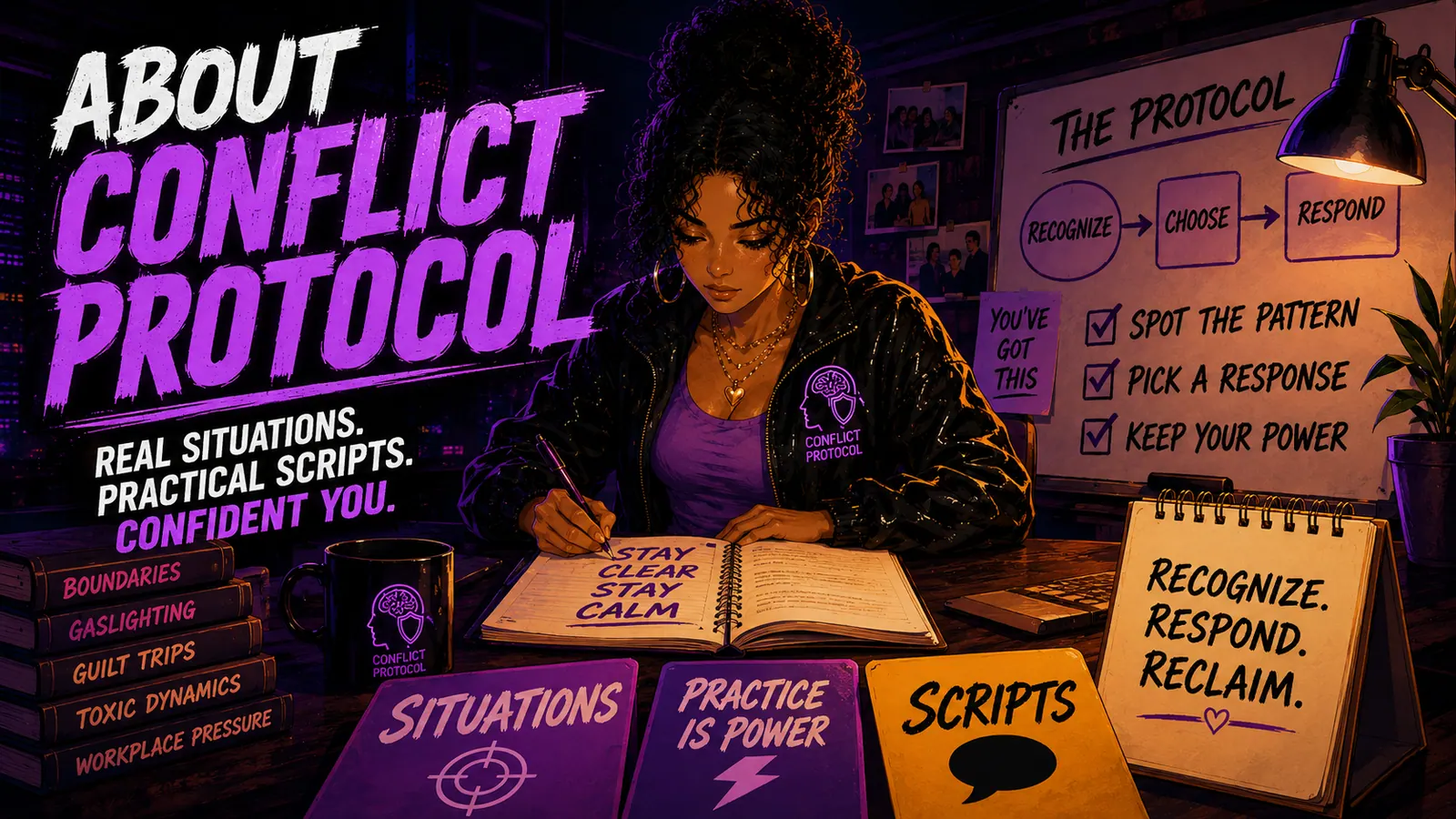
Conflict Protocol starts as a resource library: articles, scripts, and quick references for difficult conversations. The simulator lets you rehearse a line against pushback, get feedback, and try a steadier version before the real conversation starts.
The writing is designed to be practical rather than clinical. We avoid diagnosing the other person and focus instead on observable pressure patterns, usable language, and decisions you can actually take in the moment.
Editorial approach
Articles are written as educational communication guides. They aim to explain the pattern, show what it sounds like, offer scripts, and point toward practice when a response needs repetition. The quick-reference library is intentionally shorter: it helps you recognize a move and choose a response without reading a full essay.
- Article pages are deeper educational guides.
- Patterns and techniques pages are quick reference entries.
- Situation pages group resources by the pressure people are actually facing.
- The simulator is for rehearsal, not for replacing professional support.
Authorship and review
Current pages use the temporary byline Conflict Protocol Editorial until a confirmed public human author profile is available. The site does not claim medical, therapeutic, legal, or clinical review.
For psychology-adjacent pillar guides, sources are listed at the bottom of the page when they support definitions, safety limits, or origin claims. Scripts remain practical examples, not clinical instructions.
TODO: Add a named author page after the site owner confirms the exact public author name, bio, profile URL, and sameAs links.
Safety and scope
Conflict Protocol gives you practical words to use and a place to practice them. It is not therapy, legal advice, emergency help, or a replacement for professional support. It cannot assess your safety, diagnose another person, or tell you what is legally or clinically appropriate in your situation.
If you are dealing with threats, violence, stalking, coercive control, workplace retaliation, self-harm risk, or any situation where safety is uncertain, involve qualified local support. Scripts can help with words. They are not a safety plan.