Start Here
Start here when hard conversations make you lose the words.
Conflict Protocol is a practical communication resource and AI practice simulator for people who over-explain, freeze, appease, attack, or lose their boundary under pressure.
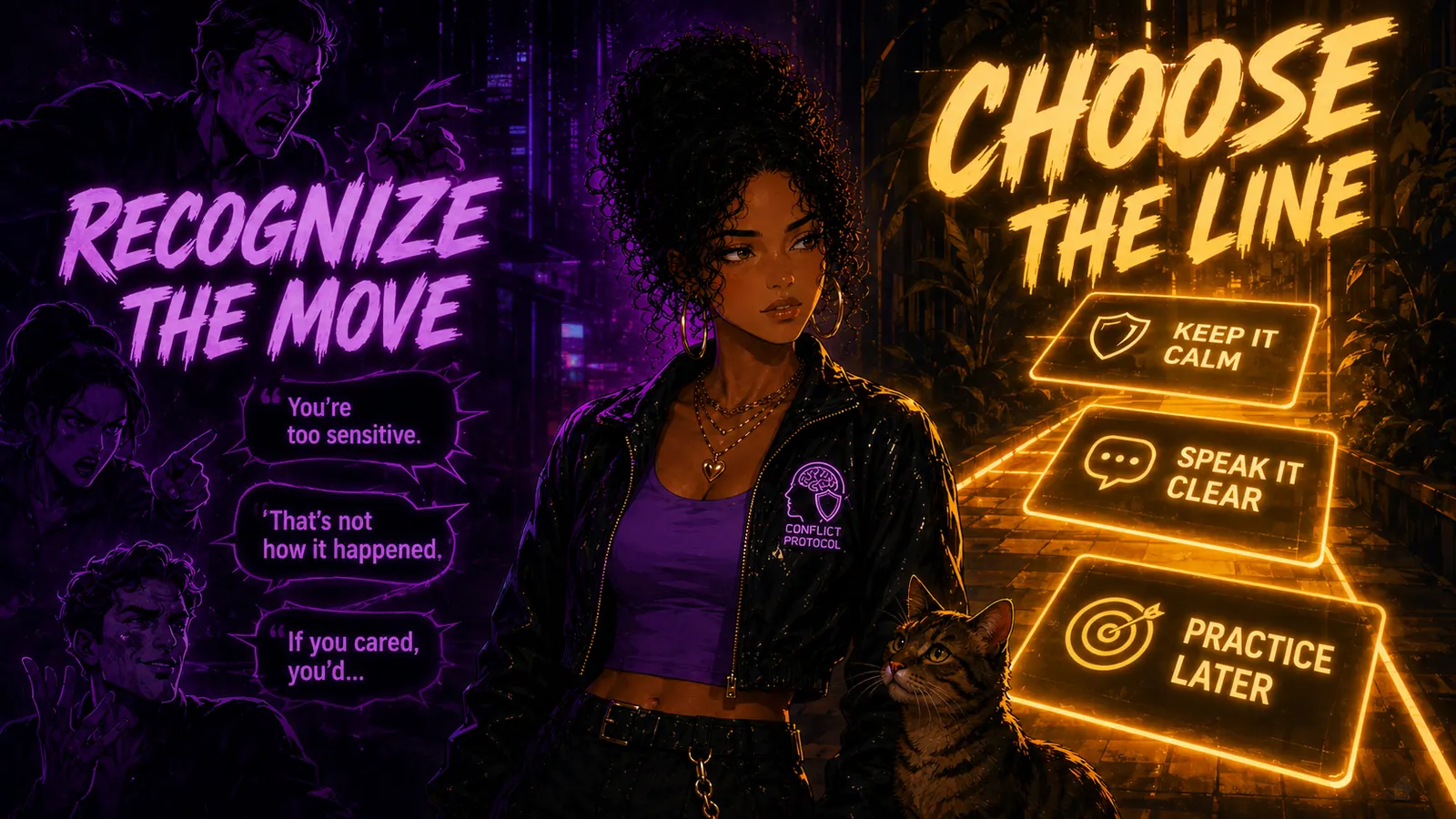
In plain terms: Conflict Protocol helps you recognize the move, find a short script, choose a communication technique, and practice the response until it becomes easier to reach.
Who this is for
This is for you if...
Conflict Protocol is built for people who understand advice in theory, then feel the room speed up and lose the sentence they needed.
- You replay conversations later and know exactly what you wish you had said.
- You over-explain when someone pressures, guilt-trips, or questions your character.
- You freeze when a boss, parent, partner, or friend pushes past your limit.
- You get pulled into gaslighting, DARVO, memory trials, or blame reversal.
- You understand communication advice intellectually, but need practice using it live.
Not sure what pattern this is?
Use the pressure cue.
First three reads
Read these in order.
This is the shortest path from "I do not know what to say" to a line you can practice.
Recover one sentence
Use this if you froze, over-explained, said yes too fast, or need the next five minutes.
2Find the sentence
Start with a short line you can actually use before the room speeds up.
3Match the situation
Choose the real scene: scope creep, guilt pressure, gaslighting, public shaming, or a repeated ask.
4Rehearse the pushback
Use the simulator page when the line makes sense on paper but disappears live.
What this is not
What Conflict Protocol is not
Conflict Protocol gives you practical words to use and a place to practice them. It is not therapy, legal advice, emergency help, or a replacement for professional support. It cannot assess your safety, diagnose another person, or tell you what is legally or clinically appropriate.
If threats, violence, stalking, coercive control, workplace retaliation, self-harm risk, or safety uncertainty are involved, use qualified local support.
FAQ
Quick answers
What should I read first?
Start with What to Say if you need language now. Start with Situations if you are trying to name what is happening.
Is Conflict Protocol therapy?
No. Conflict Protocol gives you practical words to use and a place to practice them. It is not therapy, legal advice, emergency help, or a replacement for professional support.
When should I use the simulator?
Use it when you understand the script but lose access to it once the other person challenges you. The goal is rehearsal, not diagnosis.