Situation Script
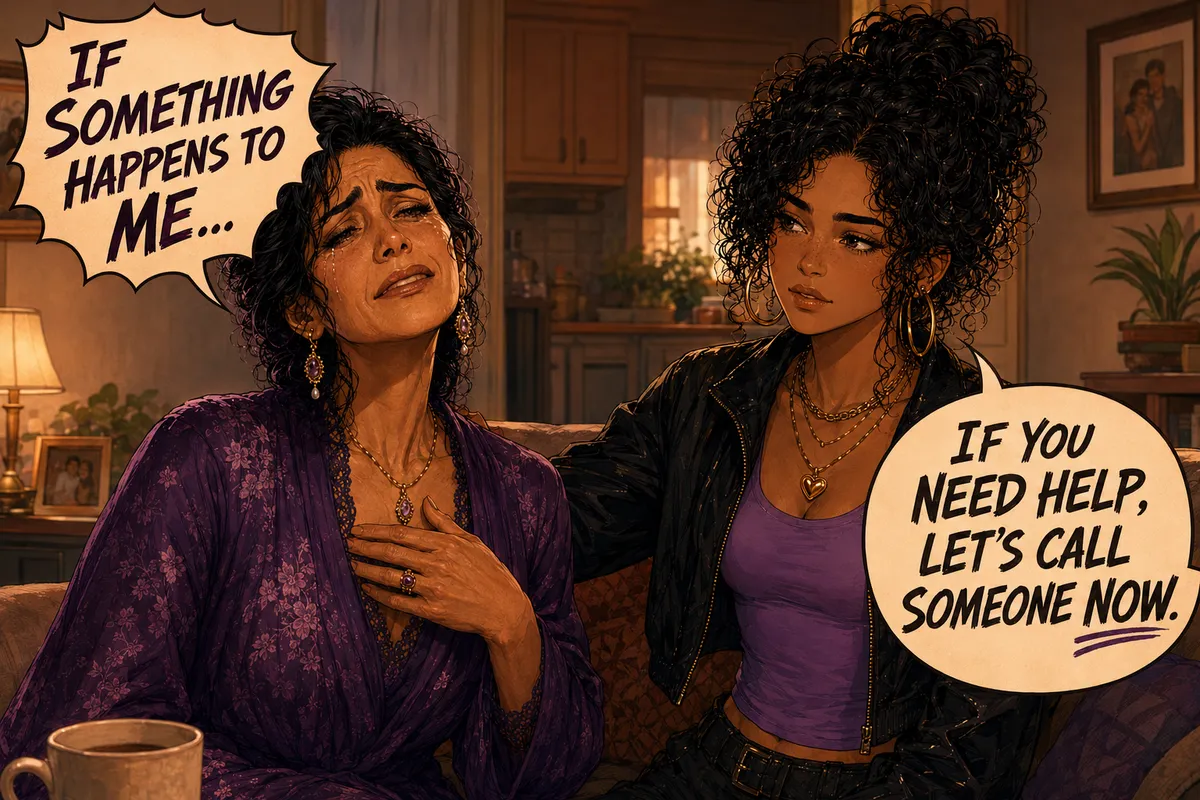
"If something happens to me, don't blame yourself."
A parent implies illness, danger, or collapse to make you change your answer.
Quick answer
Say this first
If this is medical, please call a doctor. I'm not changing my answer through fear.
If this is medical, please call a doctor. I'm not changing my answer through fear.
I care about your safety. I cannot be the emergency plan.
I'm willing to help with practical support, not pressure.
How it sounds
How it sounds in the room
"If something happens to me, don't blame yourself."
You're just making that up.
This may escalate and can be unsafe if there is a real concern.
If this is medical, please call a doctor. I'm not changing my answer through fear.
If they push back
If they push back, say this next
After all this, you're still saying NO?
I care about your safety. I cannot be the emergency plan.
I guess I know where I stand.
I'm willing to help with practical support, not pressure.
Step-by-step behavior guide
What to do in the moment
What to do: Offer warmth first if it helps you stay steady.
Say: If this is medical, please call a doctor. I'm not changing my answer through fear.
Why: Care and compliance are not the same thing.
What to do: Do not prove you are good before you answer.
Say: I care about your safety. I cannot be the emergency plan.
Why: Your NO is being treated like cruelty.
What to do: Name the decision in front of you.
Say: My answer is still NO.
Why: A specific answer is easier to hold than a debate about loyalty.
What to do: Do not balance every sacrifice, favor, or disappointment.
Say: I'm not turning this into a test of love.
Why: The ledger can make one request feel like the whole relationship.
What to do: Leave the door open for a direct request later.
Say: I can talk about plans. I'm not continuing if my NO keeps becoming proof that I don't care.
Why: Warmth works best when it has a limit.
Full exchange
How the pressure can mutate
- Them: If something happens to me, don't blame yourself.
- You: If this is medical or urgent, please contact local support. I'm not making this decision through fear.
- Them: So you don't care what happens to me?
- You: I do care. That is why I'm routing urgency to real support.
- Them: You could prevent this by coming over.
- You: I am not the emergency plan. Please call the right support if this is urgent.
- Them: Fine, I will remember this.
- You: I am stepping away from the fear loop now.
Aftermath
When the script fails
Sometimes a warm limit makes the guilt louder. That is the cue to keep care and compliance in separate lanes.
If they cry
You can care about the feeling without changing the answer.
I know this hurts. I am still not able to say yes.
If they accuse you of being cruel
Refuse the character trial.
I can care about you and still answer NO to this.
If they punish you with silence
Leave one direct path back, then stop chasing.
I am open to talking directly later. I am not reopening the decision through silence.
If someone hints at self-harm, medical danger, or immediate risk, route that to qualified local support. Do not let fear make you the emergency plan.
Patterns and techniques
Patterns and techniques in this situation
Pressure pattern to watch for:
How to defend yourself:
These tags describe possible interaction patterns, not diagnoses or proof of intent. Look at repetition, context, power, and what happens after you respond.
What is happening Why this works here
The conversation uses fear to bypass your stated limit.
Real health needs should be taken seriously, but fear should not become the method for forcing agreement.
Pressure move Pattern to notice
They may be trying to make your answer feel dangerous.
The pressure can make you feel responsible for preventing every possible bad outcome.
Wrong vs Better
Trade the instinctive reply for a cleaner one
You're just making that up.
This may escalate and can be unsafe if there is a real concern.If this is medical, please call a doctor. I'm not changing my answer through fear.
It separates real safety action from emotional pressure.Fine, I'll cancel everything.
Fear becomes the route around your boundary.I care about your safety. I cannot be the emergency plan.
It gives a responsible next step without surrendering the decision.I can't handle this.
This may be honest, but it does not create a practical next step.I'm willing to help with practical support, not pressure.
It separates real safety action from emotional pressure.Script pack
Choose the line for the moment
If this is medical, please call a doctor. I'm not changing my answer through fear.
I care about your safety. I cannot be the emergency plan.
I'm willing to help with practical support, not pressure.
My answer is still NO. If there is an emergency, use emergency support.
I can check in tomorrow. I am not coming tonight.
Communication logic Why the better line works
It separates real safety action from emotional pressure.
It gives a responsible next step without surrendering the decision.
Rehearse this
Rehearse the moment before it is live.
Use the simulator to rehearse the first line, repeat it under pressure, and avoid explaining your way out of your own boundary.
FAQ
Short answers
If this is medical, please call a doctor. I'm not changing my answer through fear.
Keep care visible, then return to the actual limit or request.
More explanation often creates more openings under pressure. Keep the answer short once your position is clear.
Safety note
Use scripts with real-world support when safety is uncertain.
Conflict Protocol gives you practical words to use and a place to practice them. It is not therapy, legal advice, emergency help, or a replacement for professional support.
If there may be a medical emergency, violence, stalking, self-harm risk, or immediate danger, contact qualified local support or emergency services. A script can help you choose words, but it is not a safety plan.