Situation Script
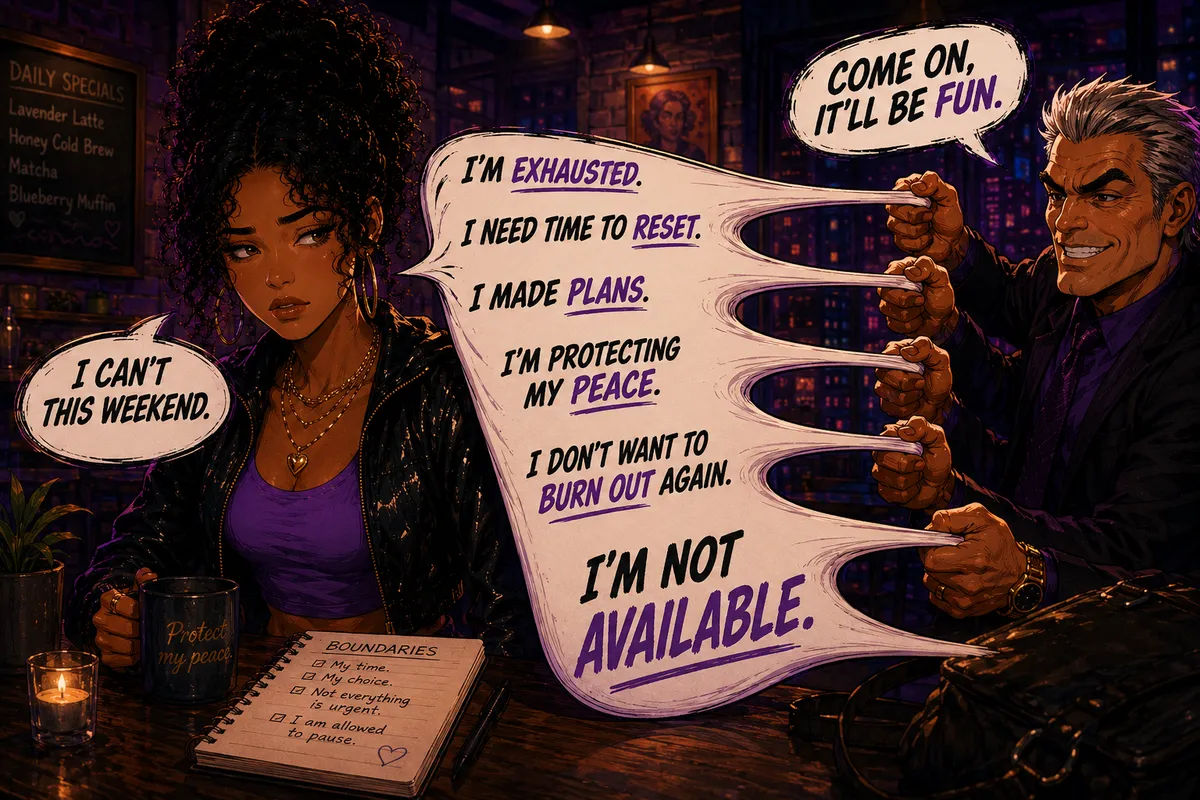
"But why? That reason does not make sense."
Every reason becomes a new objection.
Quick answer
Say this first
I'm not adding more reasons. This is my answer.
I'm not adding more reasons. This is my answer.
The short version is no; the extra reasons are not up for review.
I have answered, so I am ending the explanation loop.
How it sounds
How it sounds in the room
"But why? That reason does not make sense."
I cannot because I am tired and busy and already promised someone else.
It gives the other person several new handles to pull apart.
I'm not adding more reasons. This is my answer.
If they push back
If they push back, say this next
But I'm just asking one more time.
The short version is no; the extra reasons are not up for review.
Can you at least explain why?
I have answered, so I am ending the explanation loop.
Step-by-step behavior guide
What to do in the moment
What to do: The question may sound curious, but the pattern is testing each explanation until the answer collapses.
Say: I'm not debating my reason.
Why: Once the reason is on trial, every new detail becomes another opening.
What to do: Use the answer itself instead of improving the explanation.
Say: I'm not adding more reasons. This is my answer.
Why: The boundary does not need a reason the other person approves.
What to do: Do not offer another personal detail, calendar fact, or justification.
Say: I have answered, so I am ending the explanation loop.
Why: Less material means fewer handles for the argument.
What to do: If they push again, ask whether the ask has actually changed.
Say: Is there something new here, or are we debating my reason?
Why: It separates useful information from pressure.
What to do: Move to a pause, exit, or practical next step.
Say: The short version is no; the extra reasons are not up for review.
Why: No JADE works when the explanation stops being the price of the boundary.
Aftermath
When the script fails
If the reason debate keeps expanding, stop improving the explanation and return to the answer.
If they reject the reason
Do not offer a better reason.
My reason is not up for debate. This is my answer.
If they ask why again
Name the explanation loop.
I am not adding more explanation.
If the debate continues
Move to a pause or exit.
I am going to pause here rather than keep debating my reason.
Patterns and techniques
Patterns and techniques in this situation
Pressure pattern to watch for:
How to defend yourself:
These tags describe possible interaction patterns, not diagnoses or proof of intent. Look at repetition, context, power, and what happens after you respond.
What is happening Why this works here
A long explanation can become a menu of openings for the other person.
Keep the answer steady once the same demand comes back in a new outfit.
Pressure move Pattern to notice
The pressure works by making the old answer feel unfinished.
The effect is that repetition starts to feel like new evidence.
Wrong vs Better
Trade the instinctive reply for a cleaner one
I cannot because I am tired and busy and already promised someone else.
It gives the other person several new handles to pull apart.I'm not adding more reasons. This is my answer.
It stops 'But why?' from turning every reason into a new handle.Okay, let me explain it one more time.
It teaches the loop that repeated pressure earns fresh material.My reason does not need to make sense to you for my answer to stand.
It protects the answer after the other person rejects the first explanation.Why won't you just accept my answer?
It turns the repeat into a debate about motives instead of ending the loop.I am not adding more reasons. This is still my answer.
It makes the loop visible so you can leave without upgrading the defense.Script pack
Choose the line for the moment
I'm not adding more reasons. This is my answer.
My reason does not need to make sense to you for my answer to stand.
I am not adding more reasons. This is still my answer.
I have answered, so I am ending the explanation loop.
The short version is no; the extra reasons are not up for review.
Communication logic Why the better line works
It stops 'But why?' from turning every reason into a new handle.
It protects the answer after the other person rejects the first explanation.
It makes the loop visible so you can leave without upgrading the defense.
Rehearse this
Rehearse the moment before it is live.
Use the simulator to rehearse the first line, repeat it under pressure, and avoid explaining your way out of your own boundary.
FAQ
Short answers
I'm not adding more reasons. This is my answer.
Return to the answer instead of improving the reason. The explanation does not need to win approval.
More explanation often creates more openings under pressure. Keep the answer short once your position is clear.
Scope note
What this guide is for
Conflict Protocol gives you practical words to use and a place to practice them. It is not therapy, legal advice, emergency help, or a replacement for professional support.