Situation Script
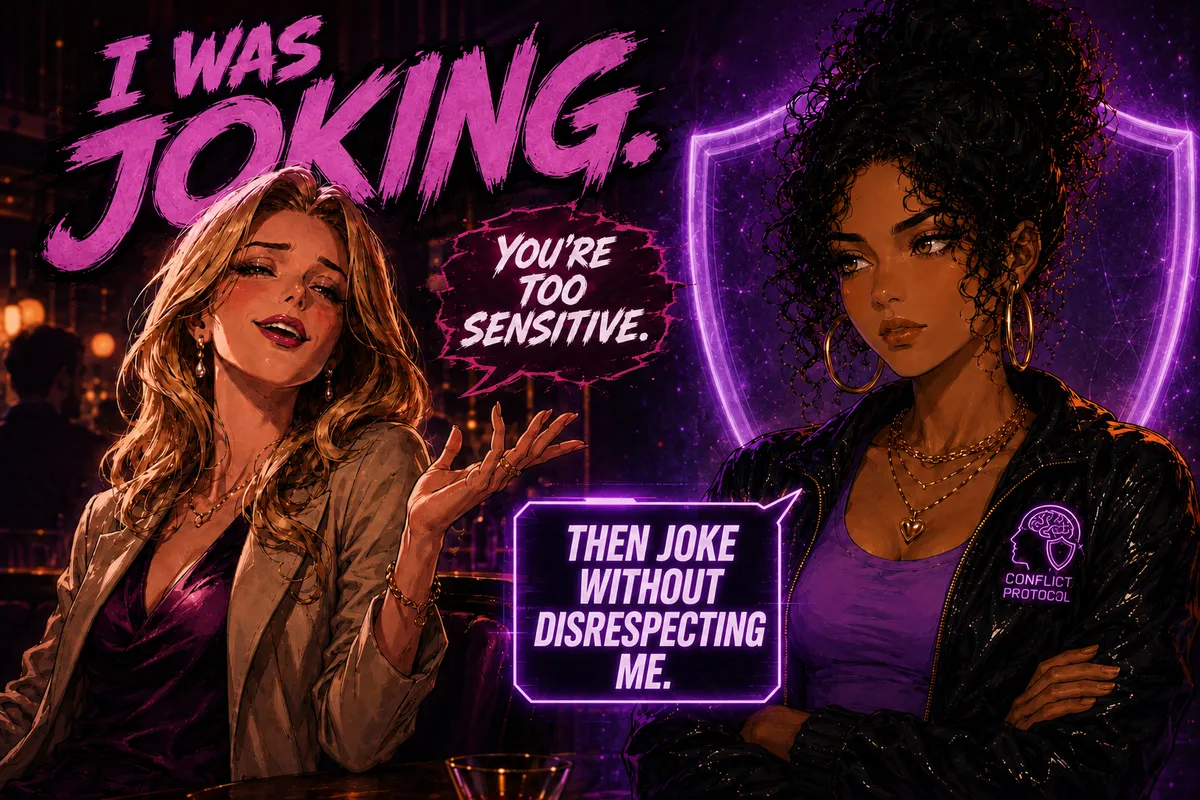
"I was joking."
A hurtful comment is minimized once you react.
Quick answer
Say this first
I hear that you meant it as a joke. I still want it to stop.
I hear that you meant it as a joke. I still want it to stop.
The intent may have been joking. The impact is still real.
Don't make jokes about that again.
How it sounds
How it sounds in the room
"I was joking."
I can't believe you think that is funny.
This can become a debate about humor instead of the limit.
I hear that you meant it as a joke. I still want it to stop.
If they push back
If they push back, say this next
You're making this into a problem again.
The intent may have been joking. The impact is still real.
So now I'm the bad person?
Don't make jokes about that again.
Step-by-step behavior guide
What to do in the moment
What to do: Acknowledge intent once, then move away from the humor trial.
Say: I hear that you meant it as a joke.
Why: The argument about humor can swallow the actual comment.
What to do: Say what needs to stop without asking the room to vote on it.
Say: I hear that you meant it as a joke. I still want it to stop.
Why: You are setting a boundary, not running a popularity check.
What to do: Do not defend whether you are too sensitive, dramatic, or fun enough.
Say: I'm not debating whether I'm too sensitive.
Why: Your reaction is not the main event. The comment is.
What to do: Make the future request plain.
Say: Don't make jokes about that again.
Why: A specific stop request is easier to remember than a long explanation.
What to do: End the exchange if it stays focused on your reaction.
Say: I'm not continuing if this stays focused on my reaction instead of the comment.
Why: Minimizing works by keeping you on defense.
Aftermath
When the script fails
If the pressure mutates, do not chase every new accusation. Hold the center: the behavior, the limit, and the next step.
If they deny it again
Anchor once. Do not litigate forever.
We remember it differently. I am not arguing the memory in circles.
If they make you the problem
Do not debate your whole character.
I am talking about this behavior, not my whole character.
If they demand immediate reassurance
Give one true line if you want to, then return to the issue.
I care about you. I am still staying with the issue I raised.
Scripts are for ordinary pressure and difficult conversations. If you are afraid, monitored, threatened, or punished for setting limits, prioritize safety and outside support over saying the perfect line.
Patterns and techniques
Patterns and techniques in this situation
Pressure pattern to watch for:
How to defend yourself:
These tags describe possible interaction patterns, not diagnoses or proof of intent. Look at repetition, context, power, and what happens after you respond.
What is happening Why this works here
The conversation shifts from what was said to whether you are allowed to object.
The word joke becomes a shield against accountability.
Pressure move Pattern to notice
They may be trying to reduce the cost of the comment.
If you defend your reaction, the behavior itself may disappear from view.
Wrong vs Better
Trade the instinctive reply for a cleaner one
I can't believe you think that is funny.
This can become a debate about humor instead of the limit.I hear that you meant it as a joke. I still want it to stop.
It avoids arguing about whether they meant harm and focuses on what needs to stop.Fine, whatever.
The comment stays unaddressed.The intent may have been joking. The impact is still real.
It gives a clear behavioral request.You're cruel.
This may escalate into character defense.Don't make jokes about that again.
It avoids arguing about whether they meant harm and focuses on what needs to stop.Script pack
Choose the line for the moment
I hear that you meant it as a joke. I still want it to stop.
The intent may have been joking. The impact is still real.
Don't make jokes about that again.
I'm not discussing this as entertainment for the room.
If you want to repair it, acknowledge the comment instead of debating my reaction.
Communication logic Why the better line works
It avoids arguing about whether they meant harm and focuses on what needs to stop.
It gives a clear behavioral request.
Rehearse this
Rehearse the moment before it is live.
Use the simulator to rehearse the first line, repeat it under pressure, and avoid explaining your way out of your own boundary.
FAQ
Short answers
I hear that you meant it as a joke. I still want it to stop.
Return to the behavior instead of debating whether your reaction is acceptable.
More explanation often creates more openings under pressure. Keep the answer short once your position is clear.
Scope note
What this guide is for
Conflict Protocol gives you practical words to use and a place to practice them. It is not therapy, legal advice, emergency help, or a replacement for professional support.