"I Was Just Joking": Scripts for Private, Public, and Repeated Jokes
Sometimes a joke lands badly and the person repairs it. Sometimes "just joking" is used as an exit door: the comment becomes harmless, your reaction becomes the problem, and the same material returns next week. Your response should match what is happening. A one-time miss needs less force than a repeated public pattern.
Quick answer
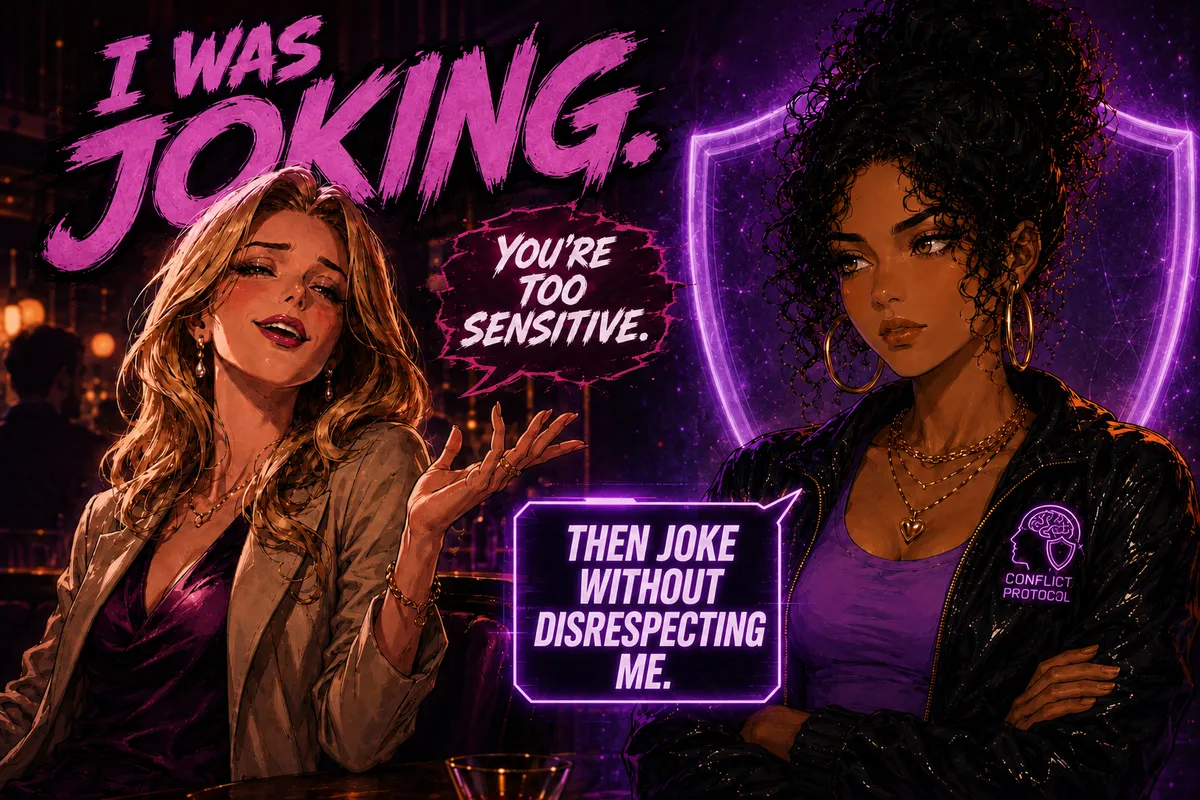
I hear that you meant it as a joke. I still want it to stop.
Intent does not change the limit. Do not joke about that again.
The group does not decide whether I have to keep being the material.
If the joke keeps returning after I asked you to stop, I am leaving the conversation.
A one-time joke from someone acting in good faith
If they apologize and stop, the conversation may be finished.
I know you meant it lightly. It did not land that way for me.
Please leave that topic out of the jokes.
A public joke at your expense
You do not need to explain your full history in front of the audience.
I do not want to be the subject of that joke.
Let's move on. Do not make that comment about me again.
Everyone thought it was funny
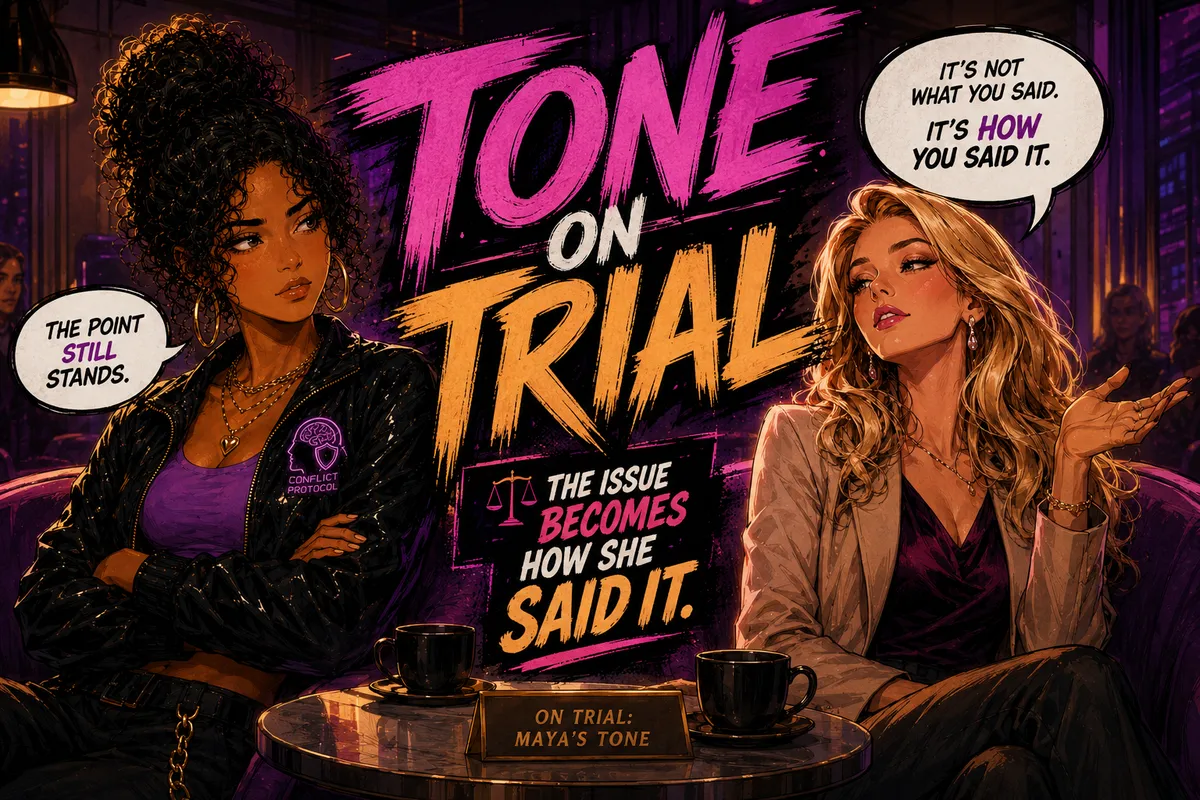
Everyone else can speak for themselves. I want it to stop.
A group laugh is not permission to keep using me as the material.
You can't take a joke
This is not a test of my sense of humor. I am asking you to stop.
You can think it was funny. I still do not want it repeated.
The same joke returns
The second or third time is no longer only about intent.
I already asked you not to joke about that.
This is now a repeated boundary issue, not a misunderstanding.
If it happens again, I will leave the conversation.
Text follow-up
Following up from earlier: I know you called it a joke. I do not want comments about that repeated, privately or in front of other people.
For work: I want to keep workplace comments professional. Please do not use me or that topic as meeting humor again.
What repair looks like
You do not need a perfect apology. You do need the pattern to change.
- they acknowledge the impact
- they do not argue your reaction
- they stop using the material
- they do not punish you for raising it
When to leave the exchange
If your boundary becomes the next joke, stop supplying material.
I am not staying in a conversation where the boundary is also entertainment.
Related paths
Open the scenario: "I was joking.".
Patterns: Minimizing.
Techniques: I-Statements, Boundary Setting.
Related guide: /articles/someone-says-youre-too-sensitive/.
Practice: Rehearse holding the stop request.
Patterns and techniques
Patterns and techniques in this article
Pressure pattern to watch for:
How to defend yourself:
These tags describe possible interaction patterns, not diagnoses or proof of intent. Look at repetition, context, power, and what happens after you respond.