You're Too Sensitive: Stop the Tone Trial
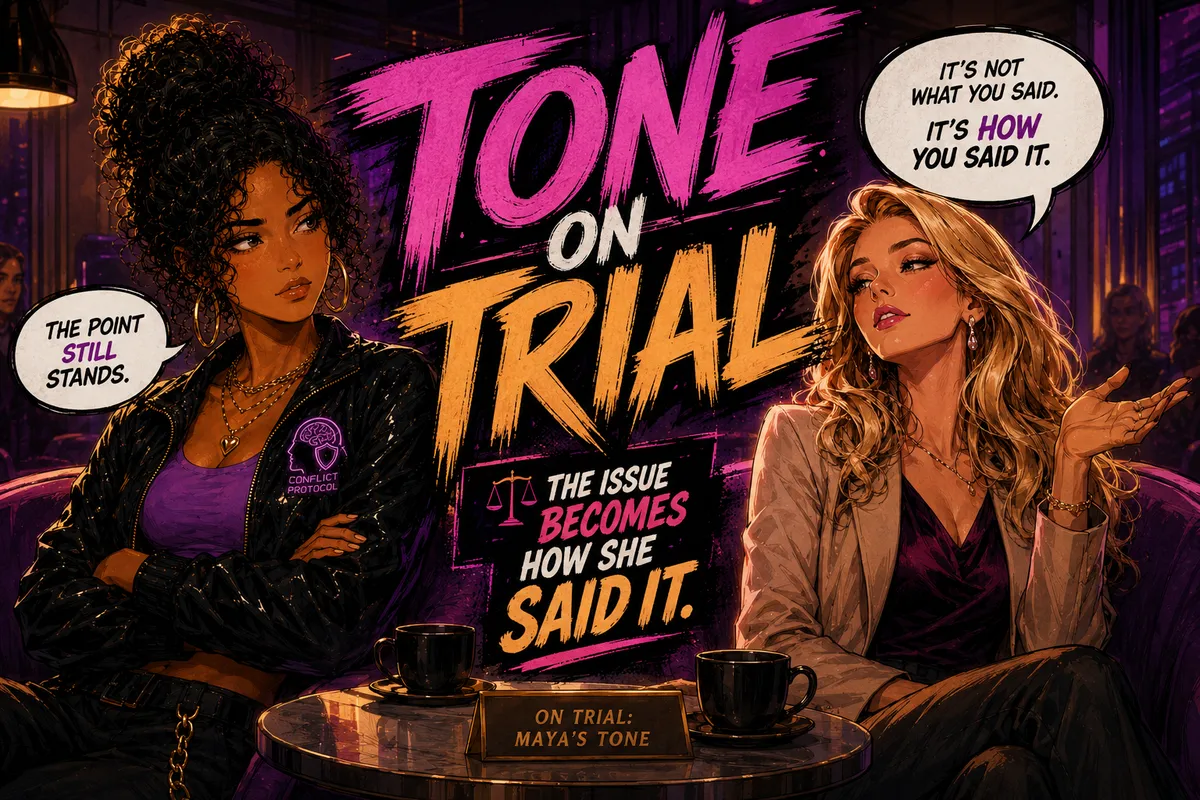
The tone trial begins when the conversation moves from the issue you raised to whether your tone, sensitivity, or reaction is acceptable. Tone can matter. The problem is when tone becomes the reason the original behavior disappears.
Quick answer
When someone says you are too sensitive, return to the behavior instead of auditioning for the correct reaction size.
My sensitivity is not the issue. The comment is the issue.
We can talk about tone after we address what happened.
I can say it more calmly. The issue still needs to be addressed.
The tone trial
The tone trial asks you to prove you are calm enough, fun enough, rational enough, or gentle enough before the original issue is allowed to count.
The way out is sequence. Tone can be repaired after the comment, behavior, or boundary stays visible.
Wrong vs better
The better line does not deny that tone can matter. It refuses to make tone the only subject.
- Wrong: I am not too sensitive. Anyone would be upset.
- Better: My reaction is not the main issue. I want that comment to stop.
- Wrong: My tone is fine. You are avoiding responsibility.
- Better: I can lower my voice. The point remains.
- Wrong: Everyone else is immature too.
- Better: I am not asking everyone to vote. I am telling you it did not work for me.
If they push back
Keep behavior first, tone second.
The mood is not more important than the boundary.
I am saying that joke does not work for me.
We can pause. I still want to return to the issue.
I can soften the delivery. I am not dropping the point.
A realistic escalation
You: I did not like being joked about in front of everyone. Them: You are too sensitive. Everyone laughed. You: I am not asking everyone to vote. I am telling you it did not work for me. Them: You always make things serious. You: I am not debating my personality. I want that comment to stop.
When the script fails
If they keep rating your reaction, refuse the rating. If they demand a softer tone before anything else, repair delivery briefly and return to the issue.
I am not debating the size of my reaction.
I can soften the delivery. I am not dropping the point.
This is no longer useful. I am stopping here.
The smallest usable version
If you cannot find the full line, use the smallest sequence.
The comment is the issue.
Tone after issue.
I am stopping here.
Related techniques and patterns
Techniques: Don't Over-Explain - No JADE, Reframing, Name the Pattern.
Patterns: Tone Policing, Minimizing, Blame Shifting.
Patterns and techniques
Patterns and techniques in this article
Pressure pattern to watch for:
How to defend yourself:
These tags describe possible interaction patterns, not diagnoses or proof of intent. Look at repetition, context, power, and what happens after you respond.
Simulator preview
See how reply feedback will work.
This static sample shows the feedback format being built for interactive practice.
- A sample persona adds pressure.
- A sample reply gives the pressure more handles.
- The preview flags the exact phrase that weakens the line.
- A cleaner version shows the next move.
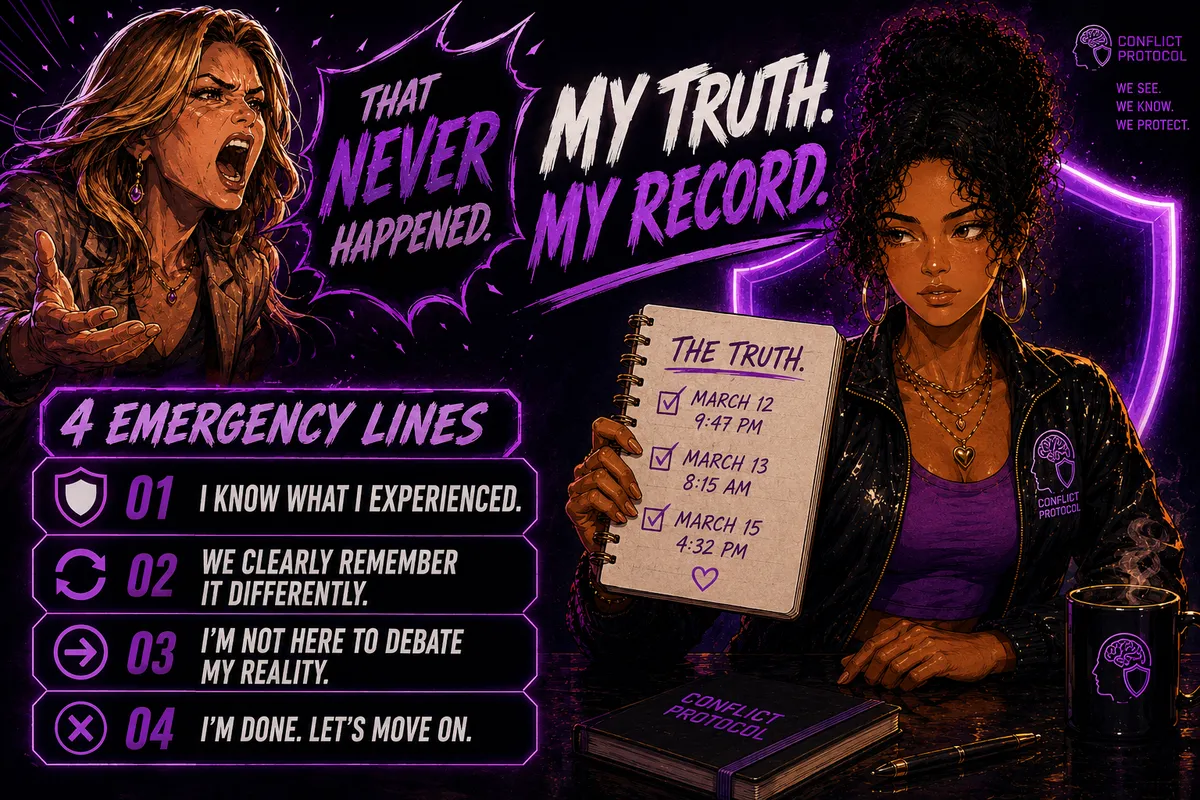
"That never happened. You always twist things."
"No, it did happen. I remember exactly where we were and what you said."
Memory-trial flag: proving every detail keeps you inside the argument they chose.
Flagged phrase: "I remember exactly where we were"
"We remember it differently. I'm not debating the memory all night. I'm talking about what I need going forward."
Rises when memory gets challenged
Recovers when the line exits the trial
Memory denial / blame reversal
Refuse the memory trial
FAQ
What is tone policing?
Tone policing is when the issue you raised gets replaced by a debate about how you raised it.
What should I say when someone calls me too sensitive?
Try: 'My sensitivity is not the issue. The comment is the issue.'
Can my tone matter and still not be the main issue?
Yes. Try: 'I can say it more calmly. The issue still needs to be addressed.'
Sources and further reading
- Deny, Attack, and Reverse Victim and Offender (DARVO) Jennifer J. Freyd, University of Oregon, accessed 2026-07-10.
- What Is Gaslighting? The National Domestic Violence Hotline, The Hotline, accessed 2026-07-10.