What to Say When Someone Calls You Too Sensitive
"Too sensitive" changes the assignment. You raised a comment, joke, decision, or pattern. Now you are expected to prove that your reaction is the correct size. Do not audition for the role of least-sensitive person in the room. Answer the version of the pressure you are actually facing.
Aftermath
When the script fails
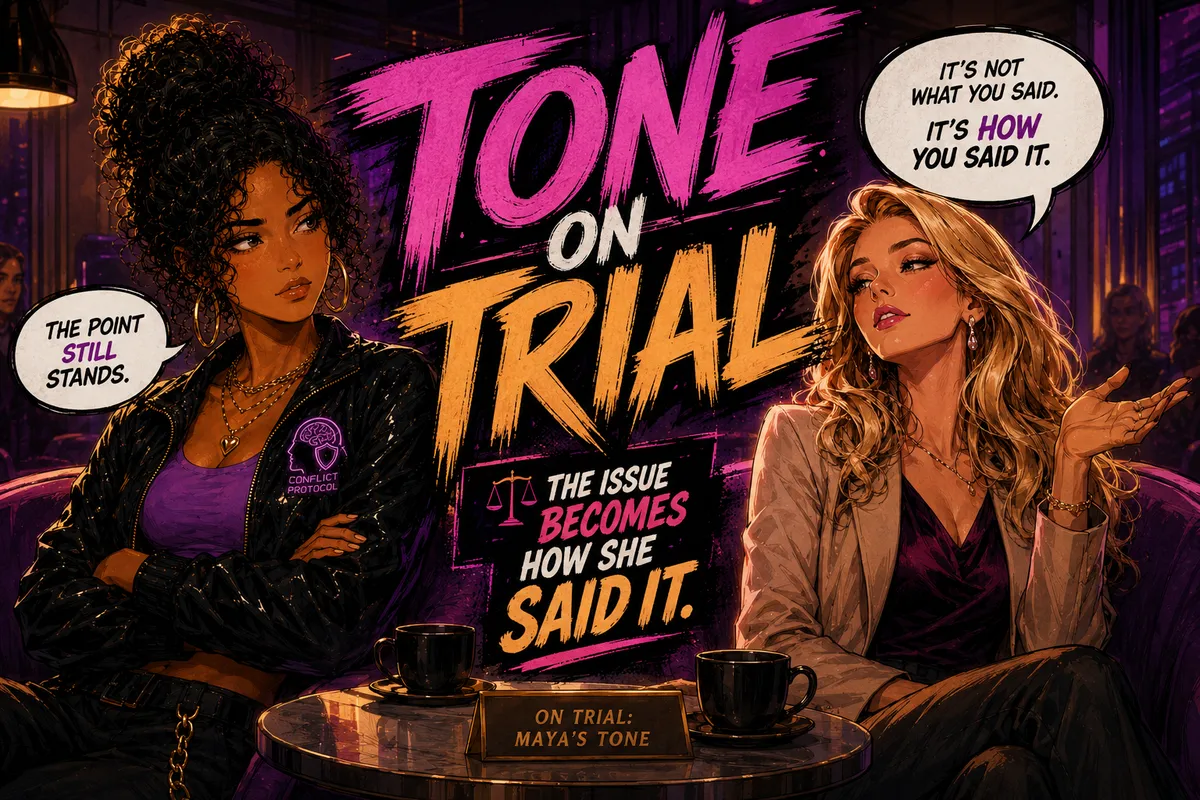
The sensitivity attack tries to make your reaction the problem. Do not audition for the role of reasonable person while the comment disappears.
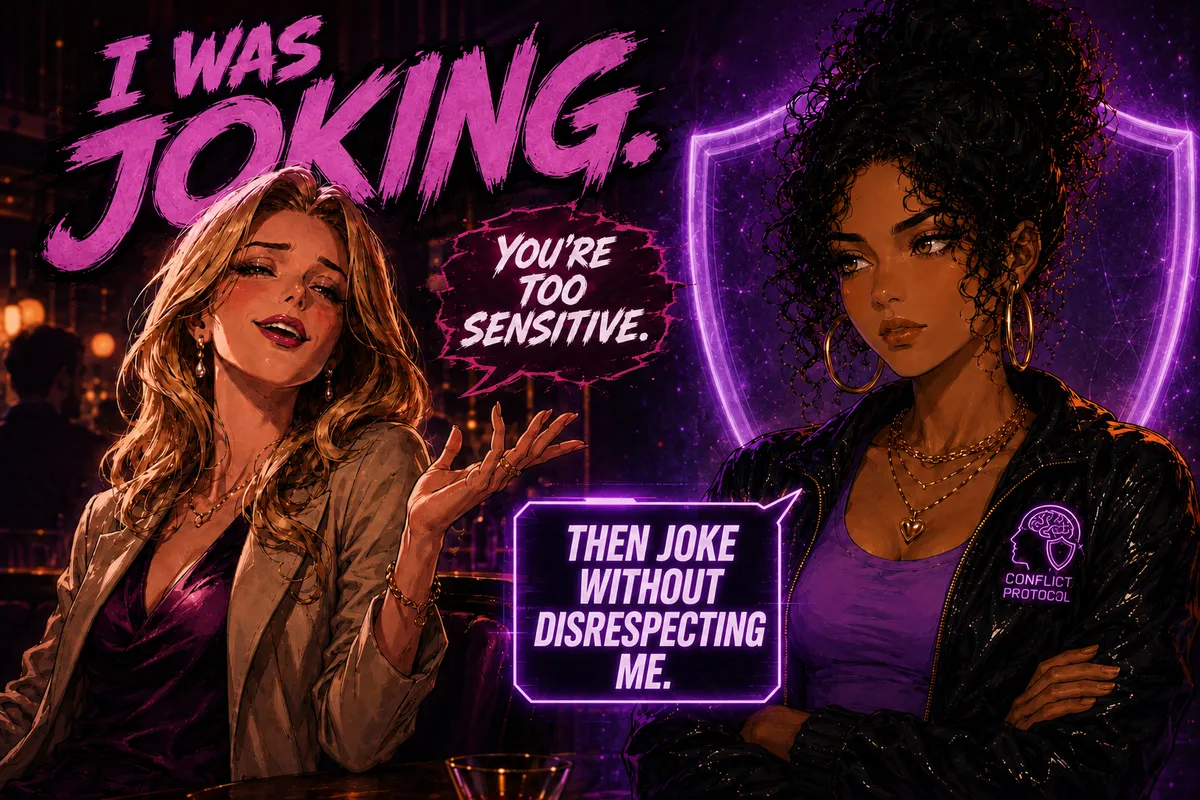
If they say it was only a joke
Accept intent once if you want to. Keep the stop request.
You may have meant it as a joke. I still want it to stop.
If they bring in the group
Do not let the room vote on your boundary.
The group does not decide what I am asking you to stop.
If they say they cannot say anything around you
Narrow the request.
You can talk to me without making that comment again.
If they keep mocking the reaction
End the exchange before your dignity becomes the entertainment.
I am not staying in a conversation where my reaction is the joke.
Quick answer
I'm not asking you to judge my sensitivity. I'm telling you this affected me.
My sensitivity is not the issue. The comment is the issue.
You may see it differently. I still want that to stop.
I am not asking the group to vote on my boundary.
If they say you're too sensitive
I'm not asking you to rate my sensitivity. I'm asking you not to make that comment again.
You do not have to react the same way. I am telling you what did not work for me.
If they say everyone else laughed
The group's reaction does not decide what I am asking you to stop.
They can speak for themselves. I am speaking for me.
If they say you ruin the mood
The mood is not more important than the boundary.
I am not trying to ruin the evening. I am asking you to stop using me as the joke.
If they say I can't say anything around you
Narrow the request. Do not defend your entire personality.
You can say plenty around me. I am asking you not to say that about me.
This is one specific limit, not a ban on conversation.
If they say you're being dramatic
Calling the reaction dramatic does not address the comment.
I am staying with what happened, not debating my personality.
If your tone was sharp
You can own delivery without erasing the issue.
I can say it more calmly. I still want the comment to stop.
My tone was sharper than I wanted. The point remains.
Text versions
Short: My sensitivity is not the issue. I want that comment to stop.
Warmer: I know you may have meant it lightly. It did not land lightly for me, and I do not want it repeated.
Firmer: I am not continuing a discussion about whether I am too sensitive. Do not make that comment again.
What not to send
A boundary does not need a unanimous ruling.
- Maybe I am overreacting. Sorry.
- Anyone normal would be upset.
- Everyone who laughed is immature.
- a long defense of every past reaction you have ever had
When the issue is bigger than one phrase
If "too sensitive" appears every time you raise a concern, read the deeper tone-policing guide. The problem may be the repeated disappearance of the original issue, not the exact phrase used today.
Related paths
Open the scenario: "You're too sensitive. Everyone laughed.".
Patterns: Minimizing.
Techniques: I-Statements, Reframing.
Deeper guide: /articles/tone-policing-too-sensitive/.
Practice: Rehearse staying with the comment.
Patterns and techniques
Patterns and techniques in this article
Pressure pattern to watch for:
How to defend yourself:
These tags describe possible interaction patterns, not diagnoses or proof of intent. Look at repetition, context, power, and what happens after you respond.