Situation Script
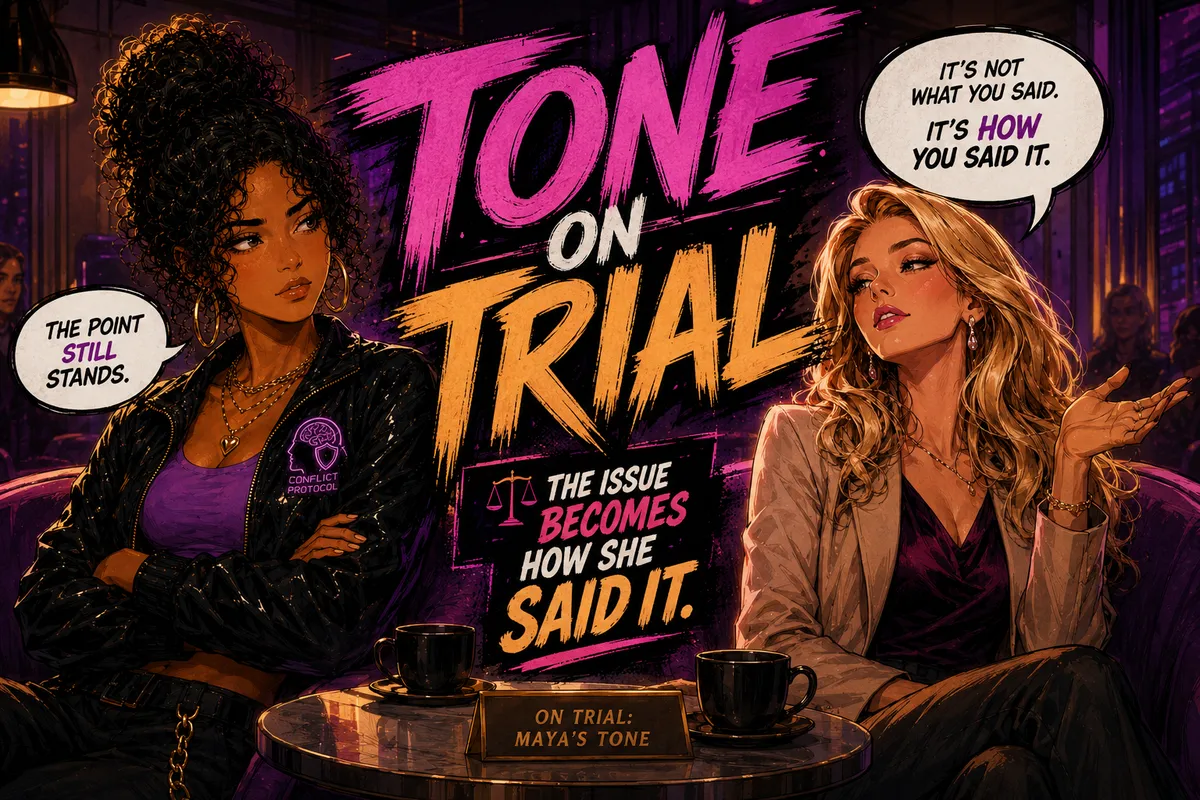
"I can't listen when you use that tone."
You raise a concern, and suddenly the whole conversation is about how you said it.
Quick answer
Say this first
We can talk about tone after we address the issue I raised.
We can talk about tone after we address the issue I raised.
I am willing to say it calmly. I am not dropping the point.
My tone is not the main issue. The behavior is.
How it sounds
How it sounds in the room
"I can't listen when you use that tone."
My tone is fine!
You are now debating tone instead of returning to the issue.
We can talk about tone after we address the issue I raised.
If they push back
If they push back, say this next
But I'm just asking one more time.
I am willing to say it calmly. I am not dropping the point.
Can you at least explain why?
My tone is not the main issue. The behavior is.
Step-by-step behavior guide
What to do in the moment
What to do: Do not let their reaction, tone claim, or character defense replace the thing you raised.
Say: We can talk about tone after we address the issue I raised.
Why: The reversal works by making the response to the issue bigger than the issue itself.
What to do: Put tone, feelings, or reaction after the original behavior instead of before it.
Say: I am willing to say it calmly. I am not dropping the point.
Why: A sequence lets both topics exist without letting the second erase the first.
What to do: Do not prove you are calm, kind, or fair enough before the issue can be discussed.
Say: I'm not debating my character. I'm talking about this behavior.
Why: Character trials consume the time the original concern needed.
What to do: Say the behavior, decision, or next step in one sentence.
Say: My tone is not the main issue. The behavior is.
Why: Concrete language gives the conversation a place to land.
What to do: Leave the door open to a better sequence later.
Say: I'm going to pause if we cannot return to the issue.
Why: Accountability cannot happen while the topic keeps flipping.
Aftermath
When the script fails
If the first line does not end the pressure, keep the center small and choose a next action.
If they keep pushing
Repeat the answer, not the whole explanation.
I am not reopening the answer.
If they ask for more reasons
Do not hand them more handles.
I am not adding more reasons. This is my answer.
If the loop continues
Exit the loop instead of trying to improve the script.
I have answered this, so I am ending the conversation here.
Patterns and techniques
Patterns and techniques in this situation
Pressure pattern to watch for:
How to defend yourself:
These tags describe possible interaction patterns, not diagnoses or proof of intent. Look at repetition, context, power, and what happens after you respond.
What is happening Why this works here
The conversation shifts from the substance of your concern to your delivery.
Tone can matter, but it should not erase the original issue.
Pressure move Pattern to notice
They may be trying to make your delivery the reason the issue cannot be discussed.
If you chase tone approval, the behavior you raised can disappear.
Wrong vs Better
Trade the instinctive reply for a cleaner one
My tone is fine!
You are now debating tone instead of returning to the issue.We can talk about tone after we address the issue I raised.
It acknowledges that delivery can be discussed without letting delivery replace substance.Sorry, sorry, I should not have said anything.
The original point vanishes.I am willing to say it calmly. I am not dropping the point.
It gives the conversation a sequence: issue first, tone later if needed.You're just deflecting.
It may be accurate, but can become another fight about motives.My tone is not the main issue. The behavior is.
It acknowledges that delivery can be discussed without letting delivery replace substance.Script pack
Choose the line for the moment
We can talk about tone after we address the issue I raised.
I am willing to say it calmly. I am not dropping the point.
My tone is not the main issue. The behavior is.
The point I am raising is this.
If we cannot stay with the issue, I am going to pause this conversation.
Communication logic Why the better line works
It acknowledges that delivery can be discussed without letting delivery replace substance.
It gives the conversation a sequence: issue first, tone later if needed.
Rehearse this
Rehearse the moment before it is live.
Use the simulator to rehearse the first line, repeat it under pressure, and avoid explaining your way out of your own boundary.
FAQ
Short answers
We can talk about tone after we address the issue I raised.
Keep the original issue first; discuss tone or reaction after the behavior is addressed.
More explanation often creates more openings under pressure. Keep the answer short once your position is clear.
Scope note
What this guide is for
Conflict Protocol gives you practical words to use and a place to practice them. It is not therapy, legal advice, emergency help, or a replacement for professional support.