Situation Script
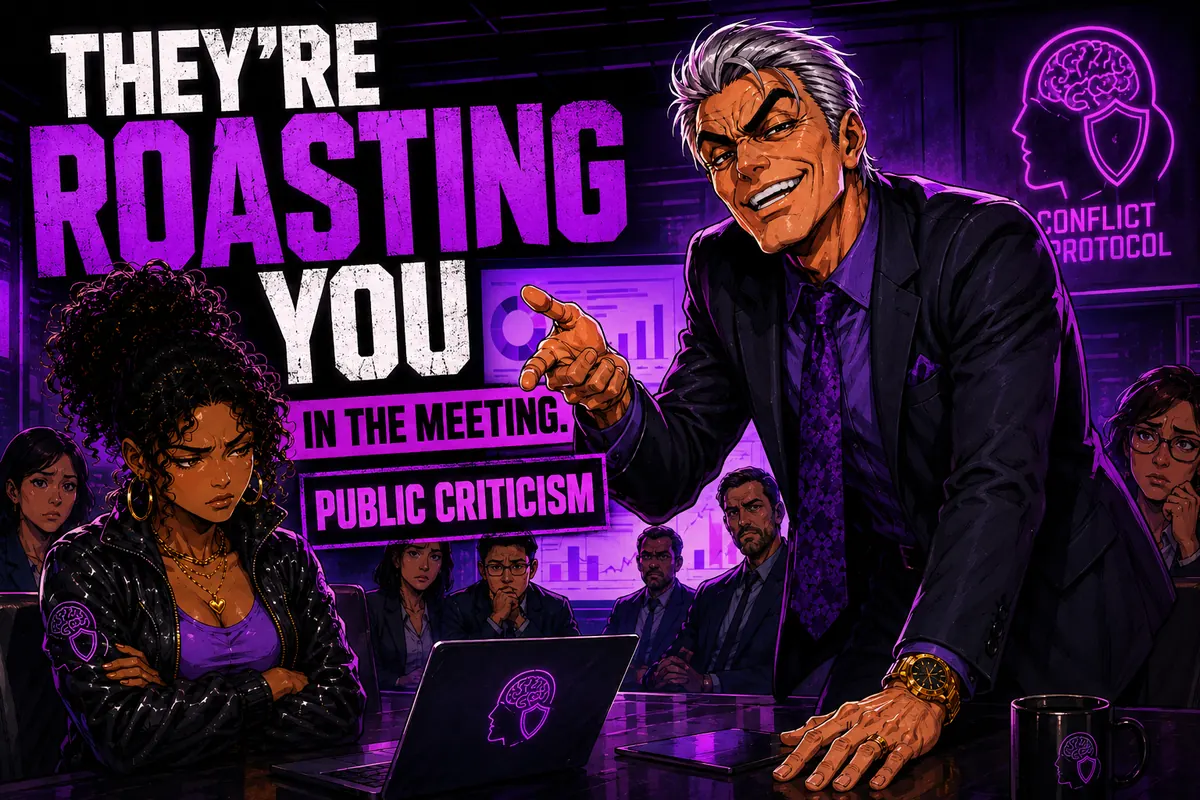
"They're roasting you in the meeting."
A boss or coworker criticizes you publicly instead of handling it directly.
Quick answer
Say this first
I can discuss the details after this meeting.
I can discuss the details after this meeting.
I do not want to resolve this in front of the group.
Let's keep this meeting on the agenda.
How it sounds
How it sounds in the room
"They're roasting you in the meeting."
You're embarrassing me on purpose.
This may be true, but it can escalate the audience dynamic.
I can discuss the details after this meeting.
If they push back
If they push back, say this next
It's just one quick thing. I thought you were committed.
I do not want to resolve this in front of the group.
So this is not a priority for you?
Let's keep this meeting on the agenda.
Step-by-step behavior guide
What to do in the moment
What to do: Give the room only what it needs to stop the public damage.
Say: I can discuss the details after this meeting.
Why: The meeting is not the place to prove every detail.
What to do: Name where the real conversation should happen.
Say: I do not want to resolve this in front of the group.
Why: It keeps feedback from becoming a performance.
What to do: If a fact must be named, keep it brief.
Say: The short answer is yes, there is a timeline issue. I can explain the specifics directly.
Why: A narrow answer protects the record without feeding the spectacle.
What to do: Help the room move on.
Say: Let's keep this meeting on the agenda.
Why: It gives people a normal next step.
What to do: Afterward, restate the preferred channel and next action.
Say: Following up on the meeting: I'm available to discuss performance concerns directly, not in front of the group.
Why: The record should show professionalism, not silence.
Full exchange
How the pressure can mutate
- Them: This is exactly the problem with your work lately.
- You: I can discuss specific feedback after this meeting.
- Them: No, people need context for why we are behind.
- You: I can name the next step here. The performance discussion should be direct.
- Them: You are being defensive.
- You: I am keeping the meeting on the agenda.
- Them: Fine. Send me the timeline.
- You: I will send the timeline and proposed next step after this call.
Aftermath
When the script fails
Public criticism makes the audience part of the pressure. Keep the room on the work and move performance details to a direct channel.
If they demand an instant defense
Do not unpack the whole story for the audience.
I can discuss specifics after the meeting. The next step here is X.
If they say the team needs to learn
Give the process lesson, not the spectacle.
The team can discuss the process change. The details belong in a direct conversation.
If they call you defensive
Stay boring.
I am keeping the meeting on the work.
After the meeting
Send a factual recap before the public story hardens.
Following up: the concern raised was X. My understanding of the next step is Y.
Patterns and techniques
Patterns and techniques in this situation
Pressure pattern to watch for:
How to defend yourself:
These tags describe possible interaction patterns, not diagnoses or proof of intent. Look at repetition, context, power, and what happens after you respond.
What is happening Why this works here
The audience becomes part of the pressure.
If you try to solve every detail in the room, the conversation can turn into a performance instead of useful feedback.
Pressure move Pattern to notice
They may be trying to use public pressure to force agreement or compliance.
They may also be venting in a way that makes the team witness your discomfort.
Wrong vs Better
Trade the instinctive reply for a cleaner one
You're embarrassing me on purpose.
This may be true, but it can escalate the audience dynamic.I can discuss the details after this meeting.
It answers enough to avoid looking evasive while refusing the public performance.Explain every detail immediately.
Now the whole room becomes the courtroom.I do not want to resolve this in front of the group.
It moves detail into a setting where the work can be discussed instead of staged.Stay silent forever.
A brief boundary can protect the record without feeding the performance.Let's keep this meeting on the agenda.
It answers enough to avoid looking evasive while refusing the public performance.Script pack
Choose the line for the moment
I can discuss the details after this meeting.
I do not want to resolve this in front of the group.
Let's keep this meeting on the agenda.
I'll follow up with the timeline after this call.
The short answer is yes, there is a timeline issue. I can explain the specifics directly.
Communication logic Why the better line works
It answers enough to avoid looking evasive while refusing the public performance.
It moves detail into a setting where the work can be discussed instead of staged.
Rehearse this
Rehearse the moment before it is live.
Use the simulator to rehearse the first line, repeat it under pressure, and avoid explaining your way out of your own boundary.
FAQ
Short answers
I can discuss the details after this meeting.
Stay narrow in the room, move details to the right channel, and follow up factually.
Long public explanations can feed the spectacle. Keep it narrow and move details offline.
Scope note
What this guide is for
Conflict Protocol gives you practical words to use and a place to practice them. It is not therapy, legal advice, emergency help, or a replacement for professional support.