When Someone Says "That Never Happened": What to Say Next
The denial lands hard because it makes the conversation feel like a test you must pass before your concern is allowed to exist. You may start searching for dates, exact wording, witnesses, or messages. Sometimes documentation matters. But in the live moment, more evidence can also pull you deeper into a trial with no finish line. This guide is for the next few minutes: anchor once, decide what needs to happen now, and stop giving the memory argument your entire evening.
Aftermath
When the script fails
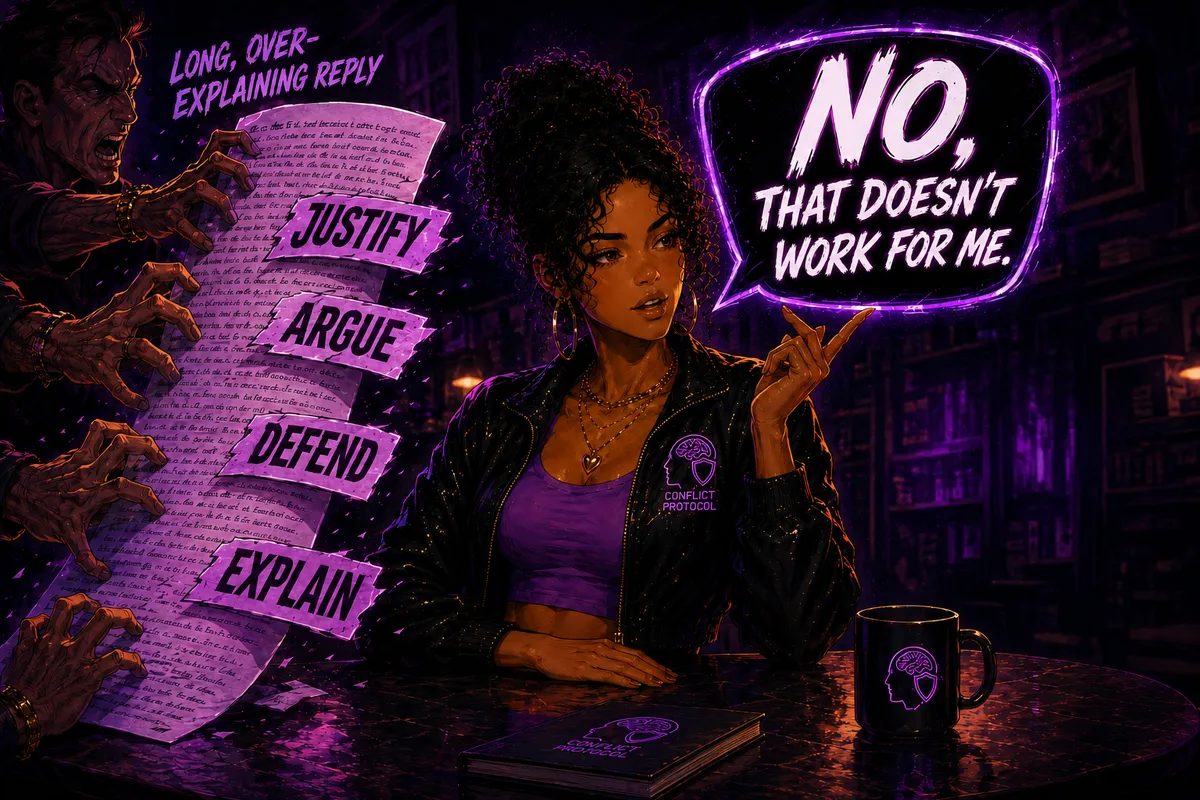
When they say it never happened, the tempting move is to bring more proof. Use proof only if it helps your next step. Do not let the whole exchange become a trial of your memory.
If they say you always twist things
Do not defend your whole history.
I am talking about this moment, not my entire memory.
If they ask for receipts
Choose whether documentation is useful. Do not perform evidence for someone committed to dismissing it.
I can share the relevant message. I am not debating this all night.
If they say you are attacking them
Return to the impact and next step.
I am saying how it affected me and what I need going forward.
If you feel unsafe
Do not confront harder. Prioritize support and distance.
Scripts are for ordinary pressure and difficult conversations. If you are afraid of the person, being monitored, threatened, or punished for setting limits, prioritize safety and outside support over saying the perfect line.
Quick answer
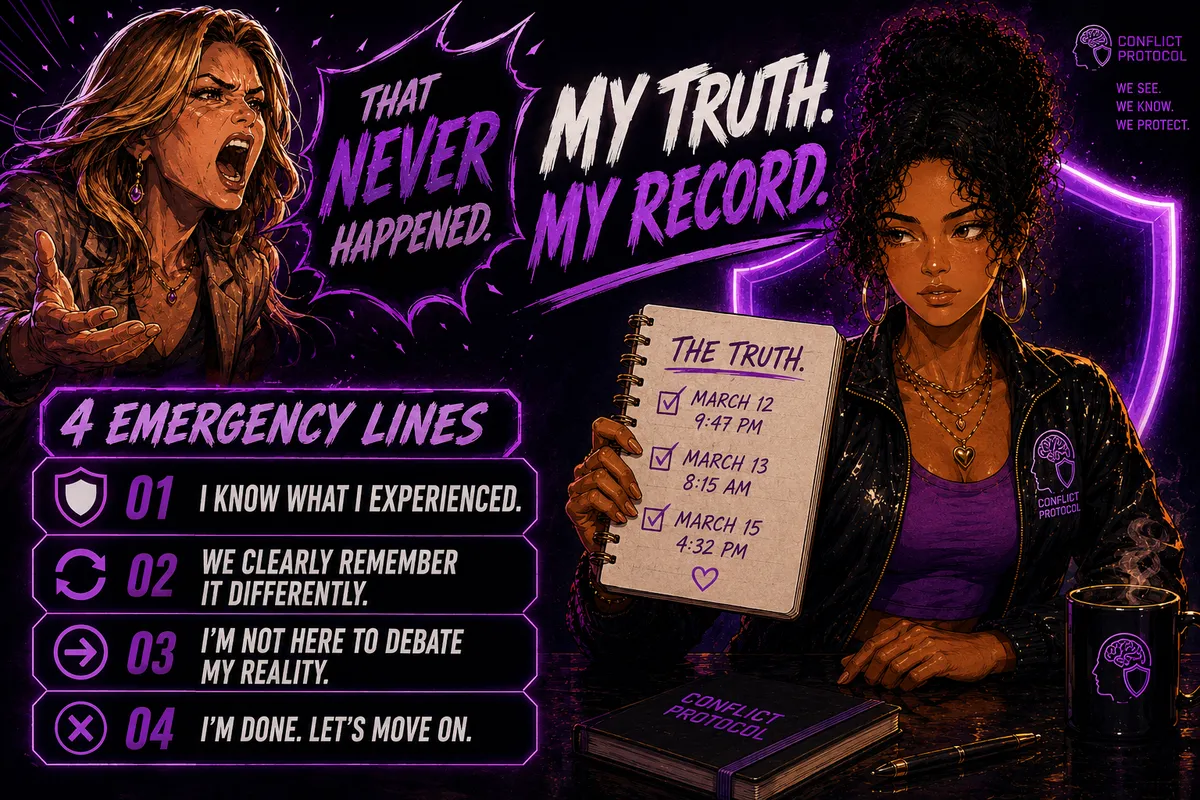
We remember it differently. I'm not debating the memory all night. I'm talking about what I need going forward.
We remember it differently. I'm not arguing the memory in circles.
You do not have to agree with my account for me to set this limit.
The detail I am clear on is that I do not want this repeated.
Choose the job of your next sentence
Do not use the same response for every denial. Decide what you need the sentence to do.
Anchor your account: I remember it differently, and I am acting from my account.
Name the future limit: We may not agree about the conversation. I am asking that this not happen again.
Move to a written record: My notes show a different agreement. Let's confirm the next step in writing.
End the memory trial: I am not continuing a conversation where my memory is the whole subject.
If they deny it again
A second denial is not a request for a longer opening statement.
Them: "That still did not happen." You: "We remember it differently. I am staying with what I need going forward."
Them: "You always invent things." You: "I am not debating my entire credibility. I am talking about this issue."
Them: "Everyone remembers it my way." You: "I am not asking the room to vote on my boundary."
If they demand proof
Use proof when it changes the next action, not when it only buys another round.
I can share the relevant message. I am not turning this into an all-night argument.
The written scope is what I will follow unless we change it here.
I am not trying to force a confession. I am making the next step clear.
Text and workplace versions
Text: We remember the conversation differently. I am not going to keep debating it tonight. My request is that this not happen again.
Workplace: My notes show Friday as the agreed deadline. I will work from that unless we update the timeline in writing.
Shared plans: I remember agreeing to a different plan. Let's confirm the plan we are using now.
Do not get pulled into these jobs
The useful question is not always "Can I make them admit it?" It is often "What decision or boundary still belongs to me?"
- proving your whole memory history
- explaining why you are a reliable person
- producing evidence for someone who dismisses every piece
- waiting for agreement before setting a future limit
- using the label gaslighting as the only response
When to stop scripting
If denial comes with monitoring, threats, retaliation, stalking, violence, or fear, the wording is no longer the main problem. Prioritize support, distance, documentation, and qualified local help.
Related paths
Open the scenario: "That never happened. You always twist things.".
Patterns: Gaslighting / Repeated Reality Undermining.
Techniques: Don't Over-Explain - No JADE, Boundary Setting.
Deeper guide: /articles/gaslighting-response-script/.
Practice: Rehearse refusing the memory trial.
Patterns and techniques
Patterns and techniques in this article
Pressure pattern to watch for:
How to defend yourself:
These tags describe possible interaction patterns, not diagnoses or proof of intent. Look at repetition, context, power, and what happens after you respond.
Simulator preview
See how reply feedback will work.
This static sample shows the feedback format being built for interactive practice.
- A sample persona adds pressure.
- A sample reply gives the pressure more handles.
- The preview flags the exact phrase that weakens the line.
- A cleaner version shows the next move.
"That never happened. You always twist things."
"No, it did happen. I remember exactly where we were and what you said."
Memory-trial flag: proving every detail keeps you inside the argument they chose.
Flagged phrase: "I remember exactly where we were"
"We remember it differently. I'm not debating the memory all night. I'm talking about what I need going forward."
Rises when memory gets challenged
Recovers when the line exits the trial
Memory denial / blame reversal
Refuse the memory trial