Situation Script
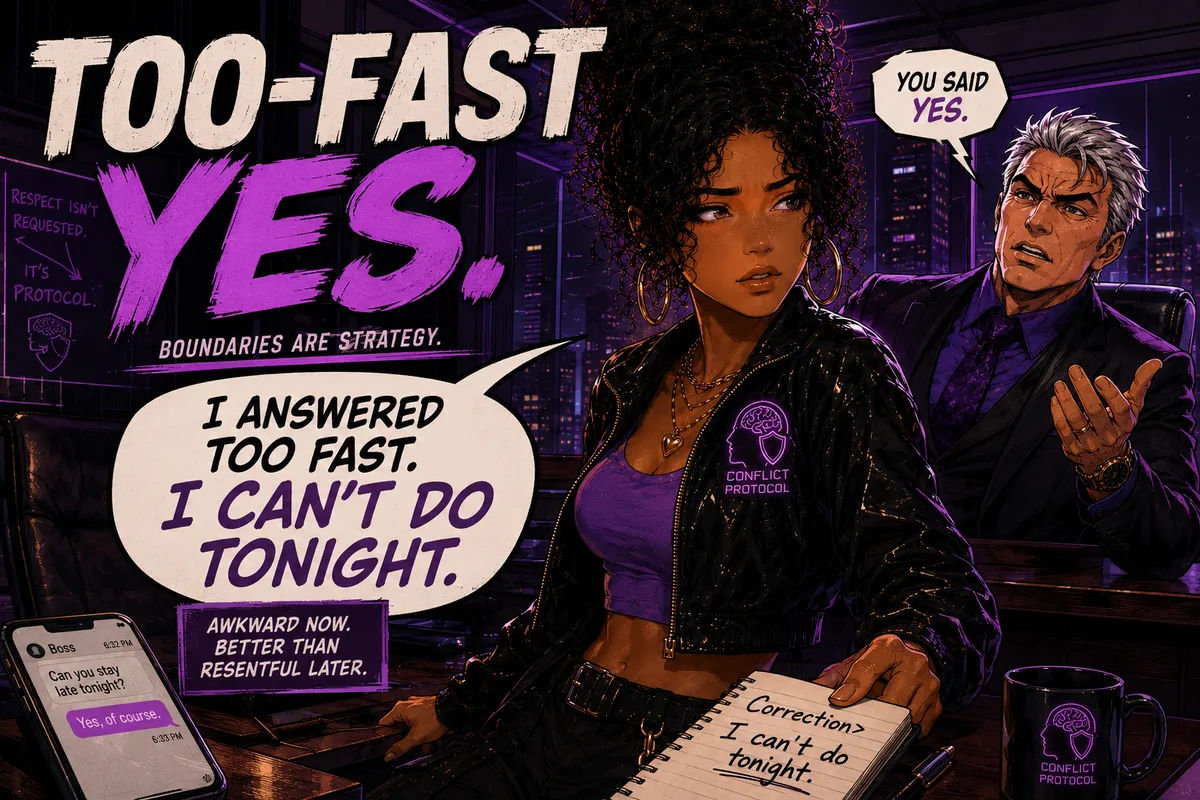
"But you already said yes."
You agreed before checking your real capacity. Now you need a clean correction.
Quick answer
Say this first
I answered too quickly. I need to correct that: I'm not available for this.
I answered too quickly. I need to correct that: I'm not available for this.
I want to clarify the point without reopening the whole debate.
I'm going to pause if this becomes a character trial.
How it sounds
How it sounds in the room
"But you already said yes."
Sorry, I was wrong about everything.
It makes the correction sound like guilt instead of a clearer answer.
I answered too quickly.
If they push back
If they push back, say this next
But that is not what you said before.
I want to clarify the point without reopening the whole debate.
So now you are changing the story?
I'm going to pause if this becomes a character trial.
Step-by-step behavior guide
What to do in the moment
Say: I answered too quickly.
Say: I need to correct that.
Say: I'm not available for this.
Say: I'm not able to take it on.
Say: I can review it Monday.
Aftermath
When the script fails
If speed keeps creating pressure, protect the pause first. The goal is not a better instant answer; it is enough time for a real answer.
If they need an answer now
Make the deadline part of the decision.
If you need an answer before I can check, the answer is NO.
If they call the pause unreasonable
Keep the focus on reliability, not permission.
A fast yes would not be reliable. I need to check first.
If you already said yes too fast
Correct the commitment directly.
I answered too quickly. After checking, I cannot take this on.
Patterns and techniques
Patterns and techniques in this situation
Pressure pattern to watch for:
How to defend yourself:
These tags describe possible interaction patterns, not diagnoses or proof of intent. Look at repetition, context, power, and what happens after you respond.
What is happening Why this works here
A pressured yes can be corrected. The key is to name the speed issue and give the corrected answer without a long defense.
Keep repair tied to the original point so regret does not become surrender.
Pressure move Pattern to notice
The effect is that repair can drift into surrender unless you restate the boundary clearly.
The pressure grows when regret turns into a full retraction.
Wrong vs Better
Trade the instinctive reply for a cleaner one
Sorry, I was wrong about everything.
It makes the correction sound like guilt instead of a clearer answer.I answered too quickly.
It names the fast yes as a speed problem instead of pretending the original answer was thoughtful consent.Never mind, I will make it work somehow.
It gives up more than the pressured yes required.I need to correct that: I am not available for this.
It corrects the commitment directly before resentment turns it into a messy excuse.Here is the entire history of why I said yes too fast.
It gives the other person too many openings to debate the correction.After checking, I cannot take it on.
It gives an alternative only after the real answer is clear.Script pack
Choose the line for the moment
I answered too quickly.
I need to correct that: I am not available for this.
After checking, I cannot take it on.
The yes was too fast; this is the answer I can stand by.
I can review it Monday if that helps.
Communication logic Why the better line works
It names the fast yes as a speed problem instead of pretending the original answer was thoughtful consent.
It corrects the commitment directly before resentment turns it into a messy excuse.
It gives an alternative only after the real answer is clear.
Rehearse this
Rehearse the moment before it is live.
Use the simulator to rehearse the first line, repeat it under pressure, and avoid explaining your way out of your own boundary.
FAQ
Short answers
I answered too quickly. I need to correct that: I'm not available for this.
Protect the pause. If they require an answer before you can check, make that part of the boundary.
More explanation can become another rushed yes. Check first, then answer.
Scope note
What this guide is for
Conflict Protocol gives you practical words to use and a place to practice them. It is not therapy, legal advice, emergency help, or a replacement for professional support.