Situation Script
"But your reasons kept changing."
You said too much in the moment. Now you need to return to the actual answer.
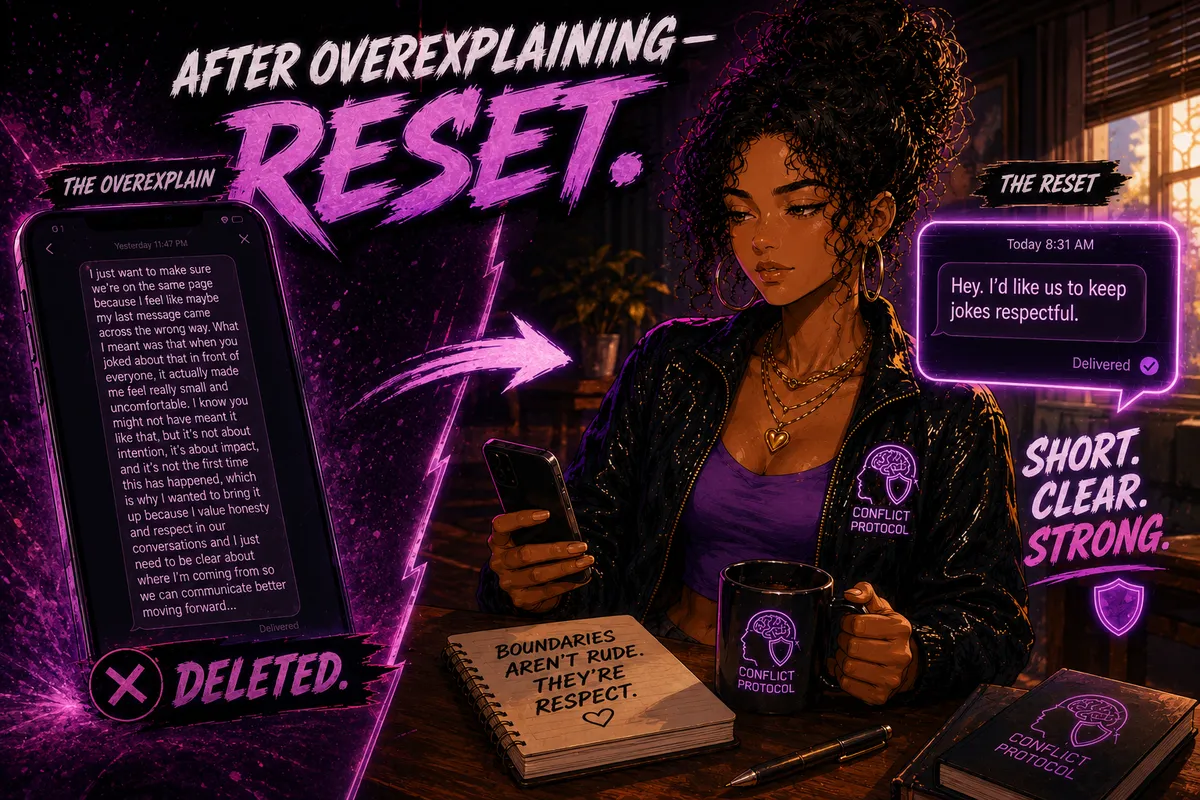
Quick answer
Say this first
I want to clarify my answer after thinking it through. I'm not available for that.
I want to clarify my answer after thinking it through. I'm not available for that.
I want to clarify the point without reopening the whole debate.
I'm going to pause if this becomes a character trial.
How it sounds
How it sounds in the room
"But your reasons kept changing."
Sorry, I was wrong about everything.
It turns a reset into a total retraction.
I want to clarify my answer after thinking it through.
If they push back
If they push back, say this next
But that is not what you said before.
I want to clarify the point without reopening the whole debate.
So now you are changing the story?
I'm going to pause if this becomes a character trial.
Step-by-step behavior guide
What to do in the moment
Say: I want to clarify my answer.
Say: The short version is: I'm not available.
Say: I'm not available for that.
Say: I'm not adding more reasons.
Say: I'll follow up Monday.
Aftermath
When the script fails
Sometimes the useful line arrives after the conversation. The reset should clarify the point, not reopen the whole fight.
If they say you are changing the story
Frame the follow-up as clarification.
I want to clarify my answer after thinking it through.
If your delivery was messy
Own the delivery without deleting the boundary.
I can own my delivery. The boundary itself is still real.
If the argument starts again
Move to a smaller container.
I want repair, not a repeat of the same argument.
Patterns and techniques
Patterns and techniques in this situation
Pressure pattern to watch for:
How to defend yourself:
These tags describe possible interaction patterns, not diagnoses or proof of intent. Look at repetition, context, power, and what happens after you respond.
What is happening Why this works here
After over-explaining, the repair is not a longer explanation. It is a cleaner answer.
Keep repair tied to the original point so regret does not become surrender.
Pressure move Pattern to notice
The effect is that repair can drift into surrender unless you restate the boundary clearly.
The pressure grows when regret turns into a full retraction.
Wrong vs Better
Trade the instinctive reply for a cleaner one
Sorry, I was wrong about everything.
It turns a reset into a total retraction.I want to clarify my answer after thinking it through.
It treats over-explaining as the thing to clean up, not as a reason to write an even longer message.Never mind, I can probably do it.
It repairs discomfort by deleting the boundary.The short version is: I am not available for that.
It gives the follow-up one job: restore the actual answer.Here is the entire history of why I said yes too fast.
The clean correction gets buried under a new speech.I am not adding more reasons to the answer.
It prevents changing reasons from becoming a new debate about whether the boundary is valid.Script pack
Choose the line for the moment
I want to clarify my answer after thinking it through.
The short version is: I am not available for that.
I am not adding more reasons to the answer.
The corrected answer is NO.
I wanted to clean up the extra explanation, not reopen the decision.
Communication logic Why the better line works
It treats over-explaining as the thing to clean up, not as a reason to write an even longer message.
It gives the follow-up one job: restore the actual answer.
It prevents changing reasons from becoming a new debate about whether the boundary is valid.
Rehearse this
Rehearse the moment before it is live.
Use the simulator to rehearse the first line, repeat it under pressure, and avoid explaining your way out of your own boundary.
FAQ
Short answers
I want to clarify my answer after thinking it through. I'm not available for that.
Own the part that is yours without deleting the original point.
More explanation often creates more openings under pressure. Keep the answer short once your position is clear.
Scope note
What this guide is for
Conflict Protocol gives you practical words to use and a place to practice them. It is not therapy, legal advice, emergency help, or a replacement for professional support.