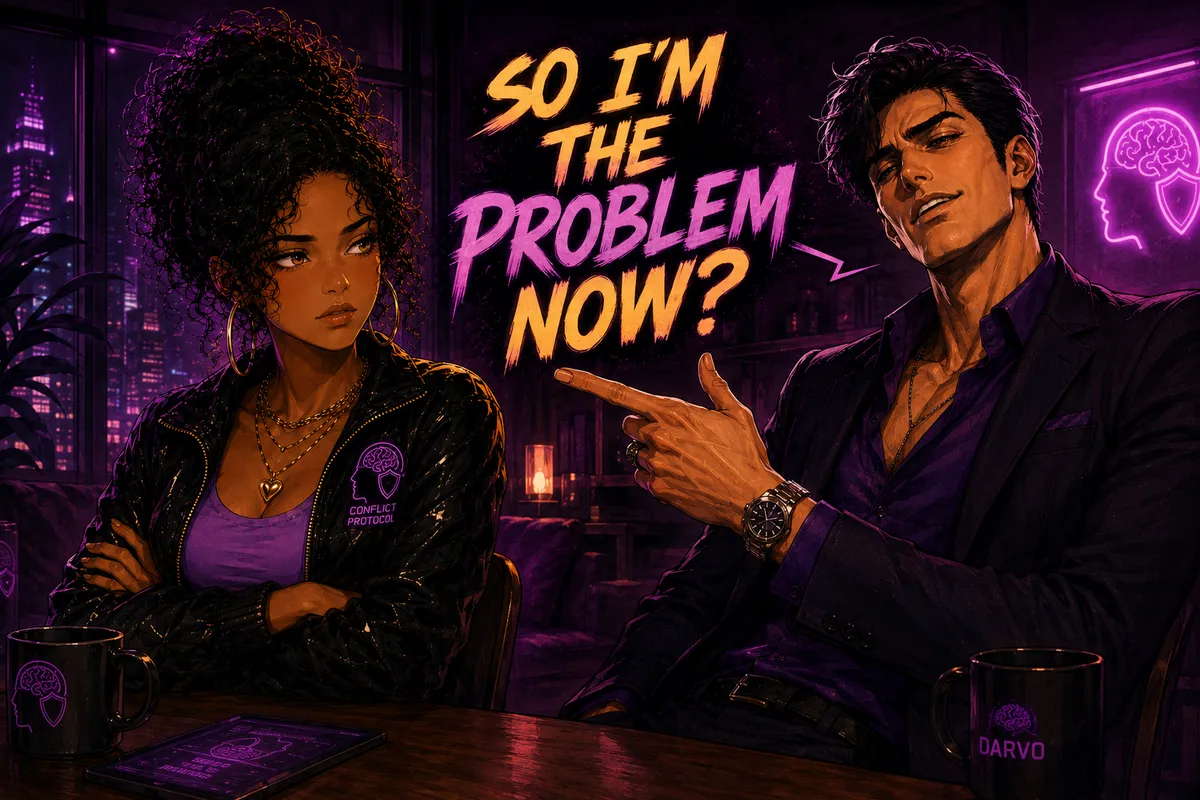
How to Respond When They Say "So Now I'm the Bad Guy?"
You name a concrete issue, and suddenly you are comforting them for being accused. Reassure only where it is true, then return to the behavior or request instead of defending your whole character.
Aftermath
When the script fails
The 'bad guy' line turns accountability into reassurance work. You can reassure once if it is true, but do not let reassurance replace the issue.
If they ask whether you think they are awful
Answer the frame without moving into character repair.
I am not calling you awful. I am talking about what happened.
If they make their hurt the whole topic
Name the order.
We can talk about your reaction after we address the issue.
If they accuse you of attacking them
Separate issue-raising from harm.
Raising this is not the same as attacking you.
If the reversal keeps repeating
Pause before you start defending yourself for noticing.
I am stopping here if we cannot stay with the behavior.
If blame reversal comes with threats, retaliation, or fear, prioritize support and documentation over live debate.
Quick answer
Do not comfort the reversal before the original issue has been addressed.
We can talk about your reaction after we address what happened.
I am not calling you a bad person. I am naming a behavior.
Let's stay with the issue I raised.
What this looks like
Them: "So now I'm the bad guy?" You: "We can talk about your reaction after we address what happened."
Them: "You always make me the villain." You: "I am not calling you a villain. I am talking about the missed agreement."
Them: "I guess I can never do anything right." You: "That is not what I said. The issue is this specific behavior."
The reversal move
The sentence asks you to stop talking about the harm and start managing their identity.
You can lower the drama without dropping the point. The issue is behavior, not whether they are a permanently bad person.
What not to say
These replies help the reversal take over.
- No, no, you are not bad. Forget I said anything.
- Yes, you are the bad guy.
- Why do you always make me comfort you?
If they keep reversing
Sequence the conversation. Original issue first, reaction second.
I am willing to talk about your reaction after we address the behavior.
I am not debating your identity. I am naming what happened.
If this stays about whether you are the bad guy, I am pausing.
Related techniques and patterns
Techniques: Reframing, Don't Over-Explain - No JADE, Name the Pattern.
Patterns: Blame Shifting.
Patterns and techniques
Patterns and techniques in this article
Pressure pattern to watch for:
How to defend yourself:
These tags describe possible interaction patterns, not diagnoses or proof of intent. Look at repetition, context, power, and what happens after you respond.
FAQ
What should I say first?
We can talk about your reaction after we address what happened.
Should I explain more if they push back?
Only add detail if it changes the next action. Otherwise, repeat once and leave the loop.